
Stick Hero: Tower Defense
Unicorn Studio OfficialStrategy
4.65.84K Reviews
- Version
- 1.0.122
- Installs
- 50.00M
- Age Rating
- Everyone 10+
Screenshots
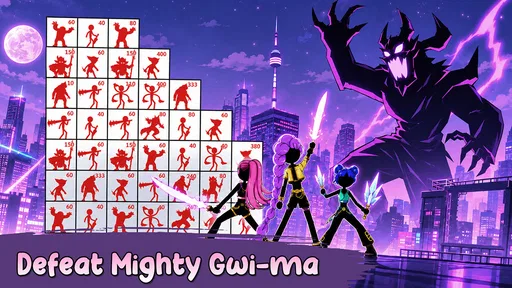
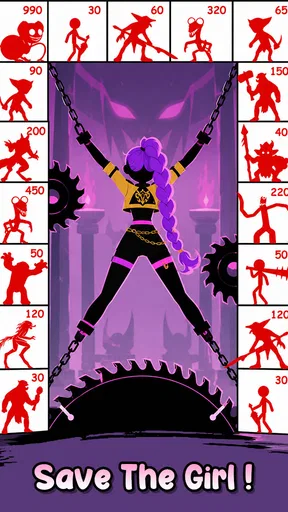
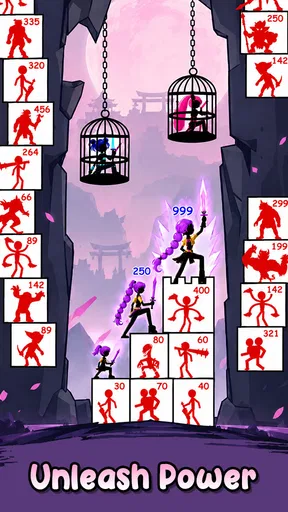
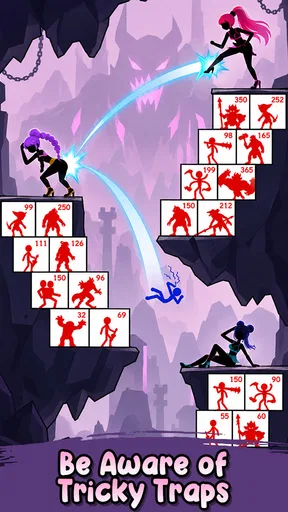
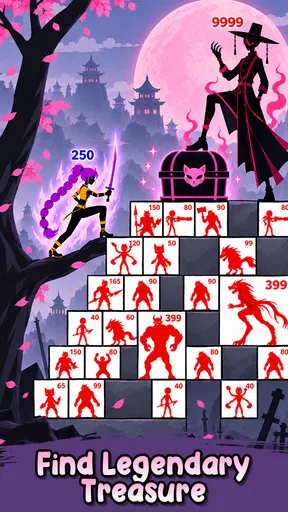
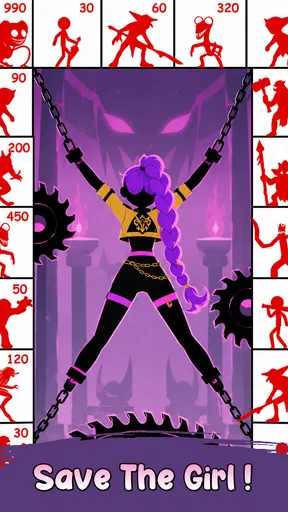
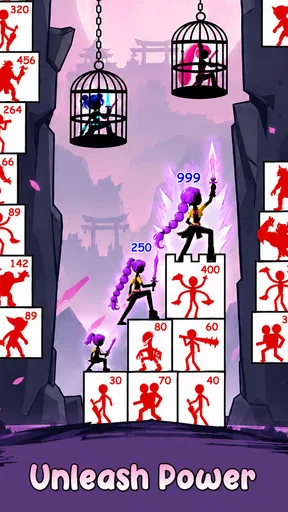
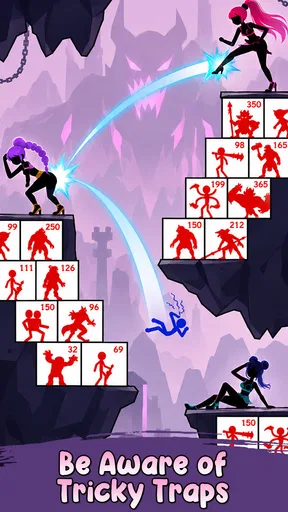
Our Review of Stick Hero: Tower Defense
 Analysis by Appyee
Stick Hero: Tower Defense is the kind of strategy game I can open for a short break without needing a long tutorial or a serious time commitment. Its basic appeal is easy to understand: I gather red and blue warriors, build up my inventory, and try to push each run toward victory. After spending time with it, I found that the strongest part is the quick decision-making. The weaker part is that its simple structure can feel repetitive if I want a deeper strategy experience.
Developed by Unicorn Studio Official, this free game sits in the strategy category and is rated for Everyone 10+. It works on devices running Android 7.1 or later, which makes it accessible to people using older phones as well as newer models. The current version is 1.0.116, and its broad reach is reflected in an average rating of 4.6 from around 436 thousand ratings, alongside over 50 million installs.
How the red-and-blue strategy loop works
The central idea is to collect warriors and make sensible choices with the resources available during play. Red and blue units are not just decoration; they give the game its identity and make each decision feel more deliberate than simply tapping through a completely automatic battle. I found myself checking what I had gathered, considering whether to strengthen my current position, and thinking about whether saving something for a later encounter would be wiser.
That loop makes the game approachable for newcomers. You do not need to learn a large collection of complicated systems before you can understand what you are doing. The store short description calls it Stick Hero, but the full experience is more useful to think of as a compact tower-defense strategy game built around collecting and progressing. It is designed for quick interaction rather than a long, cinematic campaign.
My first useful tip is to avoid treating every available item as something that must be used immediately. In a short session, it is tempting to spend whatever appears on screen because the reward feels immediate. A better habit is to pause briefly and ask whether the improvement helps with the next obstacle or merely makes the current moment look stronger. That small delay makes the strategic side more noticeable.
The color system also gives the game a practical visual language. When the screen is busy, red and blue distinctions can help me understand what I am managing without reading lengthy descriptions. This is especially helpful when playing one-handed on a phone. At the same time, players who prefer detailed statistics, elaborate unit roles, or a large tactical map may find the presentation too light.
Why the short-session format works
I think the best everyday use case is a ten-minute wait: sitting on public transport, taking a break between tasks, or relaxing before bed. The game is easy to pick up, and its focus on gathering and advancing means I can make progress without preparing a long play session. It does not demand the same attention as a traditional strategy title with a large map and many simultaneous systems.
That convenience comes with a trade-off. A quick game can be enjoyable precisely because it removes complexity, but the same simplicity limits the number of ways I can solve a problem. If I want a strategy game where positioning, economy, research, and long-term planning all interact, I would choose a more substantial alternative. Stick Hero: Tower Defense is better suited to players who want a streamlined challenge than to players searching for a full desktop-style strategy experience on mobile.
Inventory decisions matter more than speed
The inventory is where I noticed the clearest opportunity for thoughtful play. Expanding it is part of the progression, but a larger collection does not automatically make every decision better. I get more value when I pay attention to what I already have and avoid building a collection that I cannot use effectively. In other words, collecting is not the same as planning.
A practical workflow is to review the available warriors before committing to a difficult stretch. I look for a balanced selection rather than focusing on one color or one immediate upgrade. This approach is not as flashy as constantly chasing the newest addition, but it reduces the chance of reaching a challenge with a poorly prepared inventory. The game rewards attention to what is in front of me, even though it does not offer the depth of a complex deck-building strategy title.
Another useful habit is to separate progress goals. Sometimes I play simply to move forward; at other times I focus on improving the collection. Mixing those goals can make a session feel unfocused. When I decide beforehand whether the priority is reaching the next stage or strengthening my inventory, the choices become easier and the game feels less random.
What the free price actually gives you
The game is free to download and play, so the initial commitment is low. That matters because this is a casual strategy experience: I can test the loop without paying first, then decide whether its style suits me. The in-app purchase range is $0.99 to $9.49 per item, so optional spending can begin with a small amount but also reach a noticeably higher single purchase.
I would judge the value in two separate ways. For free access, the game is worth trying if you enjoy collecting warriors, making quick choices, and repeating a focused progression loop. For paid value, I would be more cautious. A purchase makes sense only if it directly improves the way you already enjoy playing, not because the game’s basic design requires you to spend money before you can decide whether it is fun.
This distinction is important. Free entry does not automatically mean unlimited value, and an in-app purchase is not automatically poor value. The right question is whether the optional item adds meaningful enjoyment for your own play style. I would set a personal spending limit before buying anything, especially if I tend to make impulse purchases during a difficult section.
For a child or younger player, the age rating of Everyone 10+ is worth considering alongside the purchase system. I would still use the device’s purchase controls and discuss spending expectations before handing over the phone. The rating describes the intended age suitability, but it does not replace sensible supervision around optional purchases.
Where the game delivers value without demanding depth
The strongest value comes from convenience. I do not need to reserve a large block of time, learn a complicated ruleset, or commit to a long multiplayer match. The red-and-blue warrior theme gives the game a recognizable hook, while the inventory goal gives me a reason to continue beyond a single round.
It also works well as a bridge for people who are curious about strategy games but are intimidated by traditional examples. Someone who normally avoids complicated tower defense may appreciate the smaller number of decisions here. The game lets that player practice thinking ahead, weighing immediate rewards, and managing a collection without placing a large rules burden in the way.
However, value drops for players who measure strategy by variety and complexity. If I want many distinct approaches, detailed enemy behavior, or a campaign that constantly introduces new tactical rules, this is not where I would spend most of my time. The game’s value is in its accessibility and repeatable rhythm, not in offering an enormous strategic sandbox.
Friction points I noticed during longer sessions
The main limitation is repetition. The same basic pattern that feels satisfying during a short break can become predictable during a longer session. Gathering, improving, and moving toward victory are clear goals, but they do not necessarily create enough variety for someone who plays several hours at once.
That is why I recommend using it in short bursts instead of forcing a marathon session. When I stop after a compact run, the simple loop remains pleasant. When I keep going after the decisions start feeling automatic, the lack of deeper alternatives becomes much more obvious. The game is not failing at its intended style; it simply has a narrower range than a more ambitious strategy title.
Another trade-off is the balance between collection size and meaningful choice. Expanding an inventory sounds exciting, but the benefit depends on whether the additions change how I approach a challenge. If collecting becomes the goal by itself, the strategic feeling can weaken. I get the best experience when every new item is treated as a tool to evaluate rather than a trophy to gather without thought.
Players who dislike optional purchase prompts may also prefer to approach the game carefully. Since in-app items are available, I would not describe the experience as completely free from commercial friction. That does not make it unsuitable, but it does mean I would check the purchase controls and avoid buying simply to remove a moment of difficulty.
How it compares with other mobile strategy choices
Compared with a traditional tower-defense game, Stick Hero: Tower Defense feels lighter and more personal. Instead of asking me to manage a broad battlefield with many fixed positions, it puts more emphasis on collecting warriors and making compact choices. That is easier to understand on a small screen, but it also gives me fewer layers to control.
Compared with a card battler, the inventory has a similar attraction because I am building a set of useful options. The difference is that the game’s red-and-blue warrior identity keeps the presentation more direct. A card battler may offer more elaborate combinations and carefully defined deck archetypes, while this game is a better fit when I want less preparation and faster movement into the action.
Compared with a large strategy game, it is much easier to start but less rewarding for detailed planners. I would choose Stick Hero: Tower Defense for a short commute and a larger alternative for a planned evening of tactical play. Neither choice is universally better; they serve different moods. The important thing is not to expect the compact format to provide the same depth as a full-scale strategy system.
Who will get the most from it
I would recommend it to casual players who like collecting, short strategic decisions, and visible progression. It is also a reasonable starting point for someone who wants to try a tower-defense-style game without learning a complicated interface. The Everyone 10+ rating makes it suitable for a broad audience, while the Android 7.1 minimum helps people with older compatible devices join in.
It is especially useful for players who enjoy setting small goals. One session can focus on advancing, another on improving the warrior collection, and another on testing whether a different inventory choice works better. That self-directed structure gives the game more staying power than the short description alone suggests.
I would skip it if I need a deep competitive system, a large strategic map, or a game that constantly changes its rules. I would also skip it if I know that optional purchases make free-to-play games frustrating for me. In that case, a paid strategy game with a clear upfront price may offer a calmer experience, even if it takes longer to learn.
Device compatibility is straightforward for Android users because the game supports Android 7.1 and newer. I would still consider the age of the phone in practical terms: a compatible operating system does not guarantee that every device will feel equally comfortable during extended play. A smaller screen may make the color-based choices less convenient, while a newer phone should generally make the compact interface easier to handle.
My final recommendation on whether to install
After reviewing it as a strategy game rather than expecting a full-scale tower-defense campaign, I see a clear audience for Stick Hero: Tower Defense. Its free entry, simple red-and-blue warrior loop, and inventory-focused progression make it easy to test and pleasant in short sessions. The large player base and strong average rating suggest that its accessible approach connects with many people, although popularity alone should not decide whether it fits your taste.
I would install it if I wanted a quick game for breaks and enjoyed making small collection decisions. I would keep spending optional and deliberate, treating the free version as the real test of whether the loop holds my attention. The available purchases range from $0.99 to $9.49 per item, so I would not buy anything until I understood exactly how it affected my own enjoyment.
My verdict is a cautious recommendation. The game delivers good free value for casual strategy fans, especially those who prefer a clean, approachable format over a complicated battlefield. Its main weakness is limited depth during long sessions, and that makes the choice simple: install it for quick tactical breaks, but skip it if you are looking for a deep strategy commitment. For me, it works best as a focused mobile diversion rather than a replacement for a larger strategy game.
Privacy and Permissions
See what permissions an app requests and how it handles your data.
- Wi-Fi connection information
- view Wi-Fi connections
- Other
- view network connections, full network access, control vibration, prevent device from sleeping
Verdict
Strengths of Stick Hero: Tower Defense
- Simple controls make it easy to start playing immediately.
- Short levels fit well into quick gaming sessions.
- Tower upgrades add satisfying progression over time.
- Bright visuals and clear animations suit casual players.
- Playable offline, making it convenient while traveling.
Limitations of Stick Hero: Tower Defense
- Difficulty can rise suddenly in later tower stages.
- Repeated enemy patterns may reduce long-term variety.
- Upgrade choices offer limited strategic depth.
- Ads may interrupt the experience between some levels.
- Progress can feel slow without spending extra resources.
Other Releases by Unicorn Studio Official
View All
Mini Games: Calm & Relax
Casual4.8

Space shooter - Galaxy attack
Arcade4.8

Gym Idle Clicker: Fitness Hero
Casual4.7
Similar Picks in This Category
View All
Clash of Clans
Supercell4.5

Plants vs. Zombies™
ELECTRONIC ARTS3.7

Lords Mobile: Kingdom Wars
IGG.COM4.5

Clash Royale
Supercell4.4

State.io — Conquer the World
CASUAL AZUR GAMES4.1

Car Driving School : Car Games
Spark Game Studios3.9
Frequently Asked Questions
What is Stick Hero: Tower Defense?
Stick Hero: Tower Defense is a casual strategy game that combines simple stickman visuals with tower-defense and battle-puzzle mechanics. You guide a hero through enemy-filled levels, choose battles carefully, collect rewards, and improve your character or equipment. Its short stages make it suitable for quick sessions, while the increasing difficulty encourages players to plan moves instead of relying only on fast reactions.
How do you play Stick Hero: Tower Defense?
Gameplay generally revolves around selecting the correct opponents or actions in the right order so your hero can survive and become stronger. Before entering a fight, compare your power with the enemies ahead and consider the rewards available. Completing stages provides coins, upgrades, or other resources that can help you handle tougher towers and unlock additional progress.
Can Stick Hero: Tower Defense be played offline?
Many of the basic levels in Stick Hero: Tower Defense may be playable without a constant internet connection, which is convenient for short sessions while traveling or when mobile data is unavailable. However, online access can still be required for advertisements, cloud synchronization, special events, updates, or in-app purchases. Availability may vary by device version, so test the game after installation.
Is Stick Hero: Tower Defense free to download?
The game is typically offered as a free download, allowing you to try its main gameplay without paying upfront. Like many free mobile titles, it may include optional in-app purchases for currency, upgrades, boosts, or other benefits, as well as advertising between or during stages. Review the store listing and your device’s purchase settings before allowing children to play.
Is Stick Hero: Tower Defense suitable for children?
Stick Hero: Tower Defense uses cartoon-style stickman characters and straightforward combat rather than realistic violence, which makes its presentation relatively accessible to younger players. Nevertheless, parents should check the age rating, advertising content, privacy information, and optional purchases before installation. The game can also encourage repeated play through upgrades and rewards, so setting screen-time and spending limits is advisable.
Play our best games!


